Case Study 01
Turning 200+ scattered blogs into a topic-authority engine
Industry: B2B Software · Role: SEO Content Specialist · Focus: Content strategy, planning & management
Client name kept confidential.
Tools used
 GA4
GA4 Google Sheets
 Gemini
 Ahrefs
 ChatGPT
The client had published 200+ blog posts across 14 topic categories — a mix of content tightly tied to their product and services and broader, top-of-funnel topics that weren't directly connected to what they sell.
The volume itself wasn't the problem. The real challenge was that organic performance was tracked blog-by-blog, with no visibility into how each topic/category was performing as a whole. That made it hard to see which areas were quietly declining, which were gaining traction, and where publishing effort was actually paying off.
Shift the unit of analysis from the individual blog to the topic/category level — so wins and losses, publishing volume per category, and internal linking into the relevant product and service pages could all be understood together, not in isolation.
Following the performance of a single post matters less than it used to. What matters more today is topical authority — how strong and consistent a brand's presence is around a subject. That same signal is also what helps LLMs understand what a site is genuinely authoritative on, not just what pages happen to rank on a given day.
- Topic authority > single-post wins
- Publishing volume & performance tracked per category
- Internal linking mapped from clusters into product & service pages
- 1
Pulled 2 years of organic traffic for every existing blog from GA4.
Used Gemini inside Google Sheets to organize and consolidate traffic data across 200+ blogs — dramatically faster than doing it manually per post.
- 2
Categorized every blog and built a category table.
Assigned each post to its topic category, then used a category table to see, per category: number of blogs published and total organic traffic across the last 2 years, compared period-over-period.
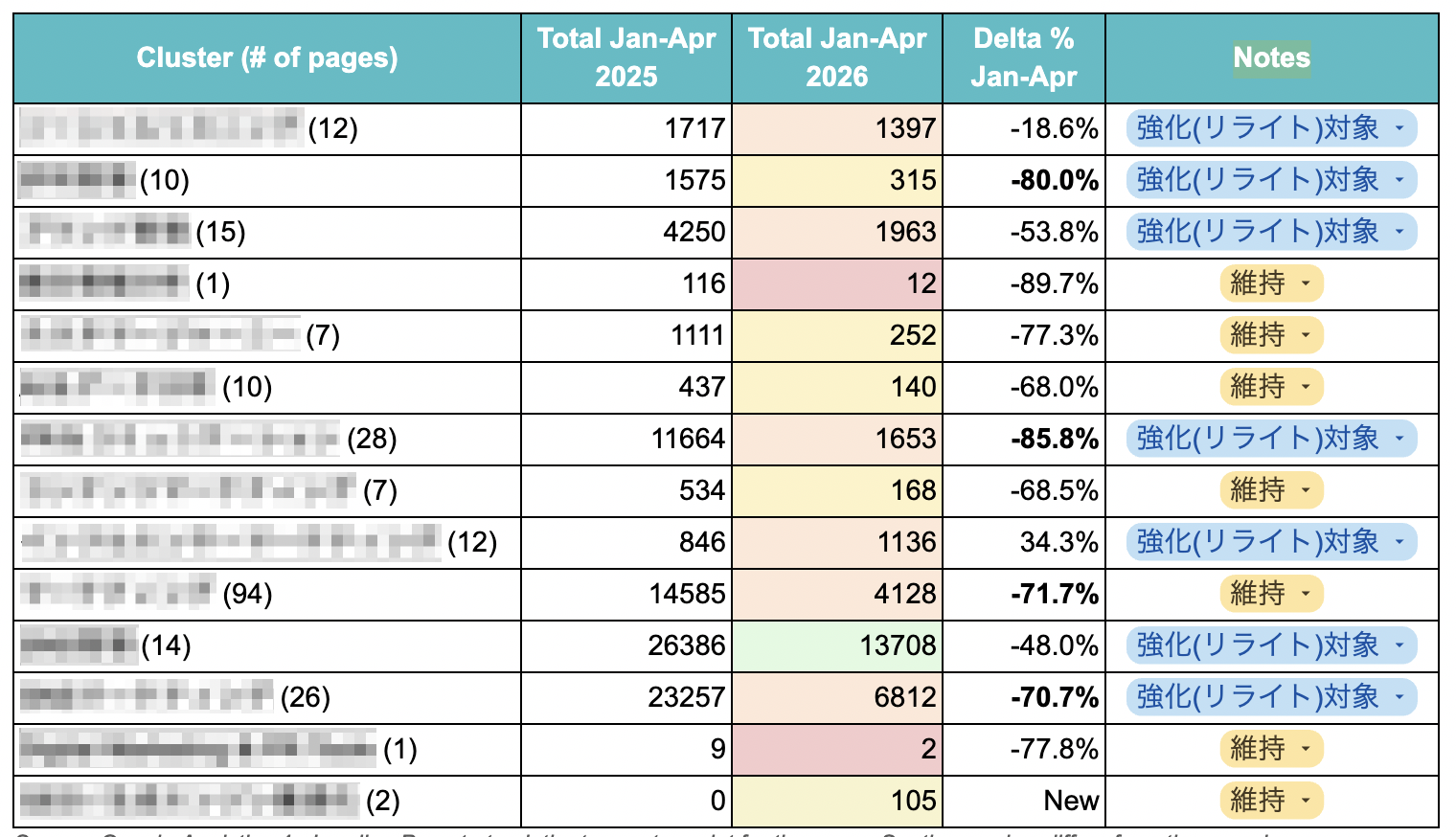
Category-level traffic view built from the table. - 3
Marked Rewrite / Keep priority per category.
For categories showing declining traffic across the comparison window, assigned a Rewrite or Keep priority based on number of blogs, traffic size, relevance to the product and services, and the client's website goals.
- 4
Deep-dived into the focused category at the individual blog level.
For every blog in the prioritized category, reviewed traffic trends alongside ranking performance for target queries — critical because AI Overviews now steal clicks even when rankings are unchanged. A post can be ranking #1 and still lose traffic, so you can't decide from a traffic trend alone.
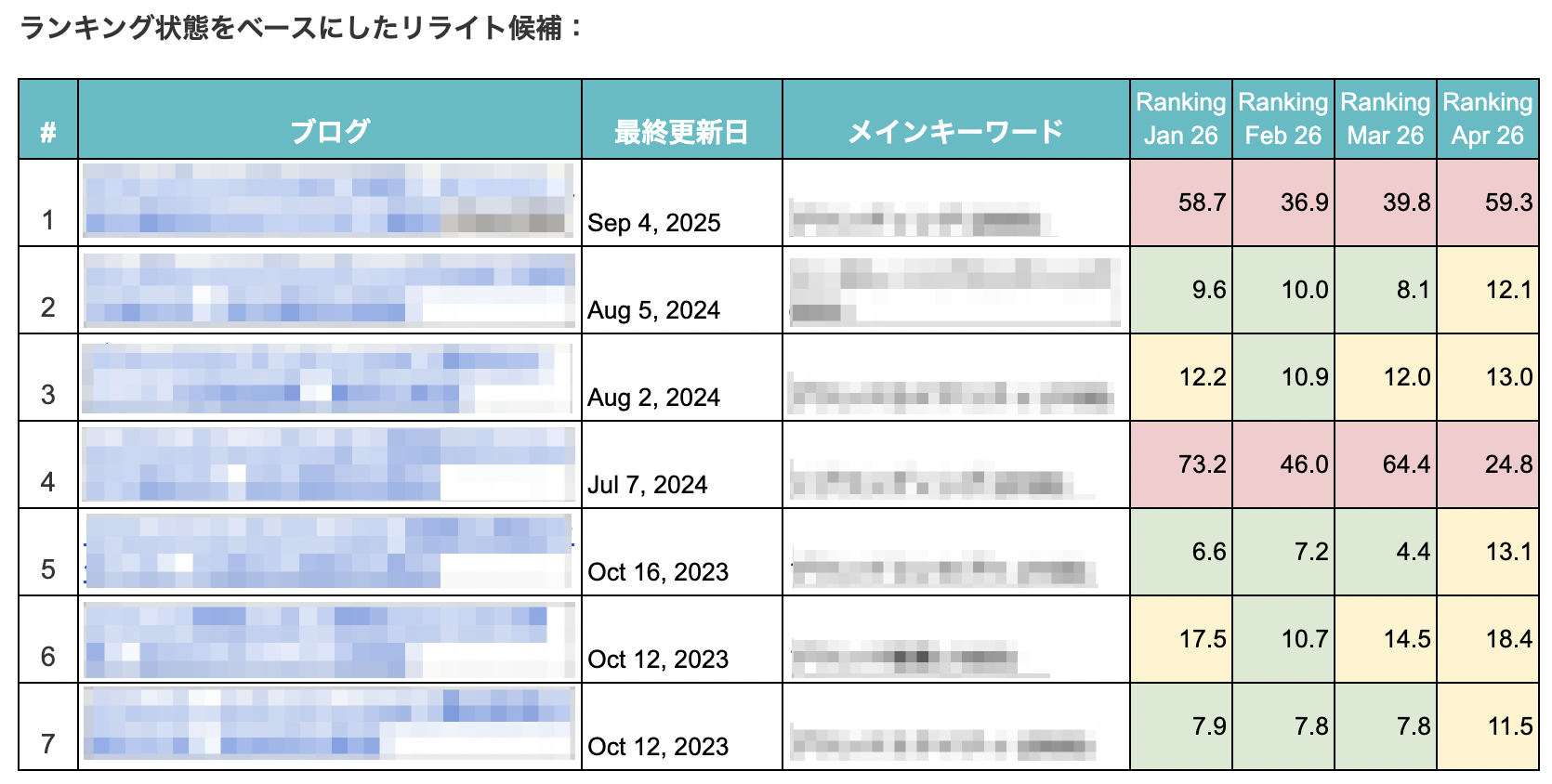
Blog-level review: traffic trends checked against ranking positions for target queries. - 5
Selected the specific blogs to rewrite or update.
Using the combined traffic + ranking signal, chose which posts to prioritize for rewriting or updating — effectively a long-term content plan grounded in real performance data instead of gut feel.
- 6
Mapped internal linking within the category.
Pulled internal links data for all blogs in the selected category from Ahrefs, then used Gemini to organize it into a readable structure.
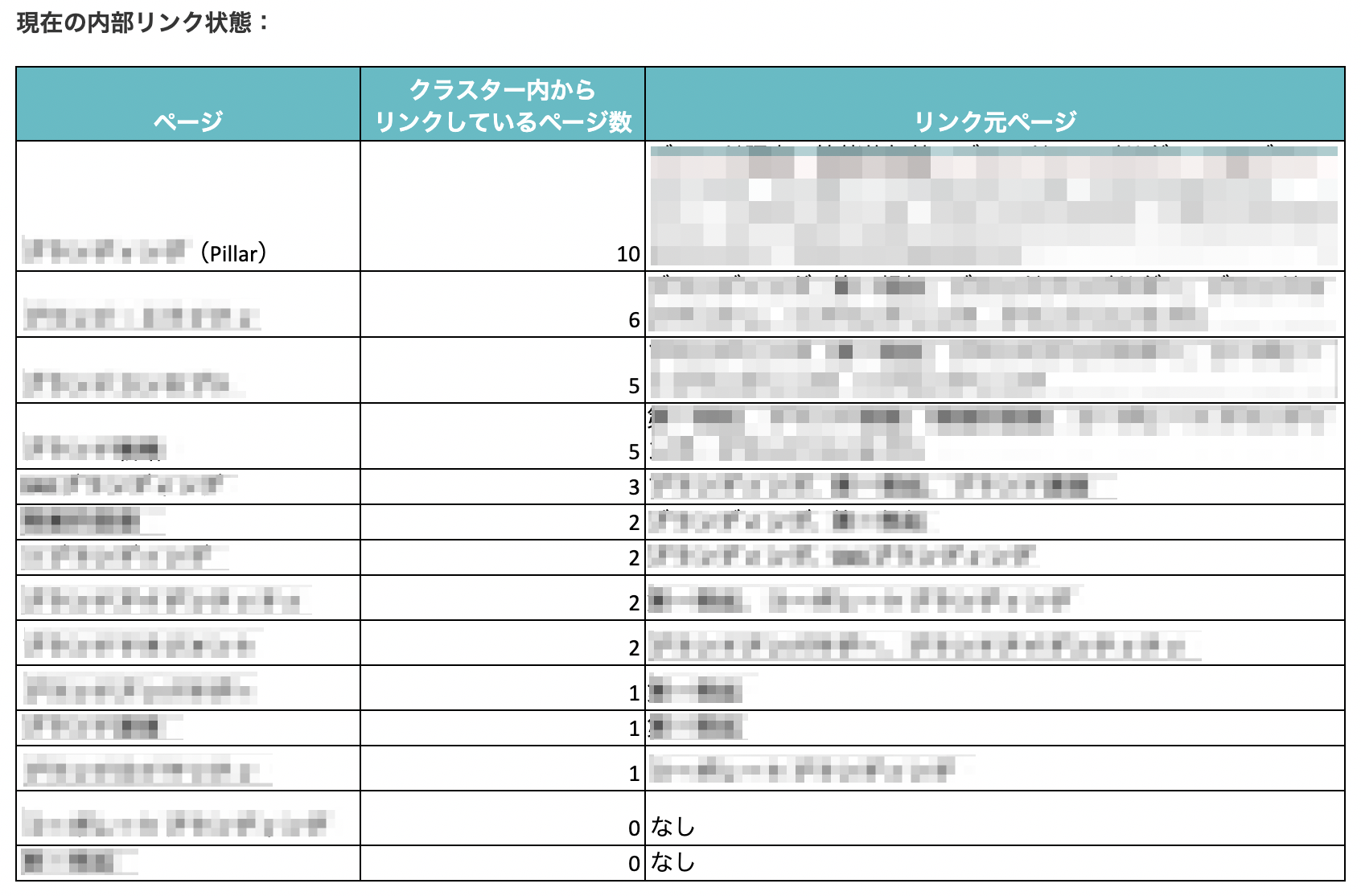
Internal linking structure organized per blog within the category. - 7
Recommended internal-linking improvements.
With the current linking structure visible, proposed best-practice adjustments — removing weak or irrelevant links and adding new ones — so internal links properly reinforce the content flow and topical relationships within the category.
The client — and I — can now see category-level organic performance alongside individual blog performance. That view simply didn't exist before, and it changes how every content decision gets framed.
Rewrites, updates, and new blog creation are now driven by real data analysis across both traffic and ranking signals, not guesswork. The long-term content plan is clearer, more structured, and easier to defend.